
The Lost Georgian Garden of Woodlands
In the early eighteenth century, when John Julius Angerstein built his house, Woodlands, this area was still in the countryside. The land which was to form the garden ran along the top of a steep escarpment facing north, which sloped down towards the wide river Thames. A contemporary account describes it like this:
Woodlands is situate upon the left of Charlton Hill, and commands a most enchanting and picturesque view of the Thames from Limehouse to Long Reach, a great part of Essex, Romford, Burntwood, etc, to an extent of between forty and fifty miles.
Angerstein chose the site for its location not too far from the City, but also near many of the people in his social circle. Blackheath, Lee and Greenwich were popular places among those looking for a country residence as a retreat from the busy built-up area of London.
The house was built in 1776 and there were initially 42 acres of land for the gardens. The garden area linked to Woodlands and Mycenae House is today only a small part of the original garden. The main rooms of the house faced north to the view across the Thames Valley and the Thames. The river is no longer visible because the intervening land is densely covered in buildings and trees.
There is no record of the garden when it was first created, and we do not know who was responsible for its layout. However, it seems to have reflected features of a typical Georgian layout, featuring:
- an informal layout designed as a classical Arcadia – an idyllic pastoral landscape based on ideas about ancient Greece
- lakes created to reflect the landscape as well as for recreation
- shrubberies planted with newly introduced exotics from abroad
- a grotto
- circuit walks taking you on a tour around the grounds
By the turn of the century the garden was playing an important role in Angerstein’s entertaining, especially for summer parties. He had a wide circle of local friends which included city merchants, gentry and royalty – including both the Prince of Wales, the future George IV, and his estranged wife. There are some wonderful contemporary descriptions of the garden’s appearance.
The approach to the house through the garden was impressive:
On your approach you pass through two gates, the second of which opens into a serpentine walk, bordered with the most beautiful trees, shrubs and flowers, which conducts you to the front of the house, the aspect of which is N.E. (the front of the house is now to the south)
From this point diverge various serpentine walks, bordered with roses, myrtles and all other tribes of most fragrant and beautiful shrubs and flowers, the perfume of which filled the air with delicious odours.
The conservatory, situated to the west of the house, commanded much praise:
One of these paths leads to the conservatory. This I am told is one of the finest in England. It is about three hundred feet long, by fifty feet wide. I never saw so great a variety of exotics.
The conservatory had a flagged floor and a large area of paving running through it, arranged so it appeared as if walking in a ‘green flowery wood’, unable to see the end of the conservatory until coming upon it.
There were several hothouses – heated greenhouses – originally warmed by stoves, but later through the use of hot water. The heat was carefully regulated by thermometers in each house. In 1801 Angerstein’s gardener had been licensed to build a hot house to the specification of a Dr Anderson’s patent. The warmth enabled grapes and other exotic fruits to be grown to be served to guests: at one large gathering we learn that the dessert consisted of pineapples, peaches, nectarines, grapes, apples and pears of uncommon size from the hot house.
There was undoubtedly an ice house within the grounds, supplying ice for the frozen desserts which graced Angerstein’s table for his many high-status guests. Its location is uncertain but may have been near the present site of St George’s church on Kirkside Road.
Plants
Wealthy men such as Angerstein were anxious to feature plants from around the globe in their gardens. A visitor of the time commented:
I never saw so great a variety of exotics. Most of them were perfectly new to me. They consisted of shrubs and flowers, deemed the most beautiful productions of the Cape of Good Hope, Botany Bay, India, Egypt, Tunis, and Algiers, all in full bloom, and in all the luxuriance they could boast in their native beds. Indeed the race of curious shrubs and flowers, in every climate of the torrid zone, has here a representative.
Further down the slope was an American Plantation:
…so called for its contents, which consist entirely of the most curious American shrubs and flowers, collected with infinite care, and great expense, from every part of that immense continent.
Plants from America were available to the wealthy in the south of England during the eighteenth century. There was a thriving trade in trees, both for commercial timber and for gardens, and they were sold as ‘exotics’ from garden centres. This influx of American trees, shrubs and plants transformed the British landscape and gardens.
Some of the American trees being introduced were North American black spruce, Eastern hemlock (Tsuga canadensis), bull bay magnolia (Magnolia grandiflora), pencil cedar (Juniperus virginiana), moosewood (Acer pensylvanicum) and toothache (Zanthoxylum americanum) trees.
Kitchen Garden
Besides the garden, this valley contains a still more interesting scene, consisting of a beautiful dairy in chaste rural simplicity, with the pans of milk arranged upon the various shelves; a curious grotto, and a farmyard, in the centre of which is a jet d’eau, cooling and refreshing the air with its streams, and presenting a beautiful picture as they played in the sun beams.
There was also a four acre kitchen garden divided into compartments and filled with every species of esculent vegetables, and abounding with strawberries, cherry trees, etc. Of the cherries, the bleeding hearts were the largest I ever saw.
Finally there was both a paddock and an orchard, and probably a couple of small lakes.
The Magnificent Plane Trees
The plane trees in the gardens are loved by everyone who knows the gardens today, but no one seems to know when they were planted. There is no evidence of them on the first Ordnance Survey map of the area. They may well be some of the trees shown on the 1914 map below.
The Gardeners
When the garden was in its heyday, the named gardener was David Stewart. Perhaps he was the figure with a wheelbarrow in this painting.
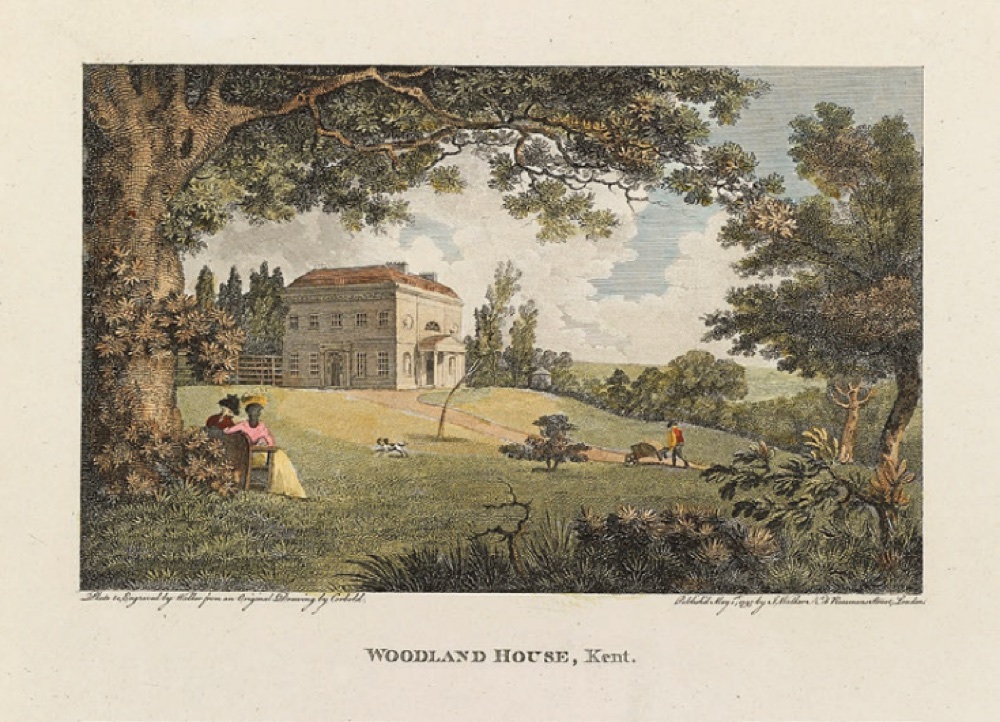
David Stewart was referred to as one of the first gardeners in England with a ‘fund of good sense as well as good taste with a knowledge of science and of the art of gardening’.
We don’t know how long he worked there, but we do know that another highly regarded gardener worked under him for two years – Robert Sweet. One of the things he referred to in discussing his work at Woodlands was the goodness of the peat earth from a field nearby: has anyone ever come across peat in this area? There was also fine white sand to be found, which is less surprising, and he could strike cuttings in this.
Such were his skills that he was apparently able to get some plants to flower for the first time in Europe, amongst them leptospermum, callistemon and acacia.
Robert Sweet had worked as a gardener from the age of sixteen, and he was working at Woodlands from about 1810. Through his work for wealthy landowners he became interested first in geraniums and rock rose species, and began publishing illustrated botanical works. He was associated with nurseries at Stockwell, Fulham and Chelsea. Many flower species were named for him.
Decline
The gardens were drastically reduced in the 1870s, when the lease of Woodlands came to an end and much of the estate was sold off for development. The house and current gardens were kept as a private residence, lived in first by solicitor William Bristow and then by shipbuilder Sir Alfred Yarrow. It was used as a hostel for Belgian refugees in the First World War, during which time many changes must have been made to the garden. The gardens were constrained to the west and east by Beaconsfield Road and Mycenae Road, and to the north by the gardens of two large houses, Fairfax and Kingsbridge, that were built beside Beaconsfield Road in the 1880s with gardens that stretched down to Mycenae Road. Part of those gardens are preserved in the Dell, beyond the wall at the north end of the main gardens.
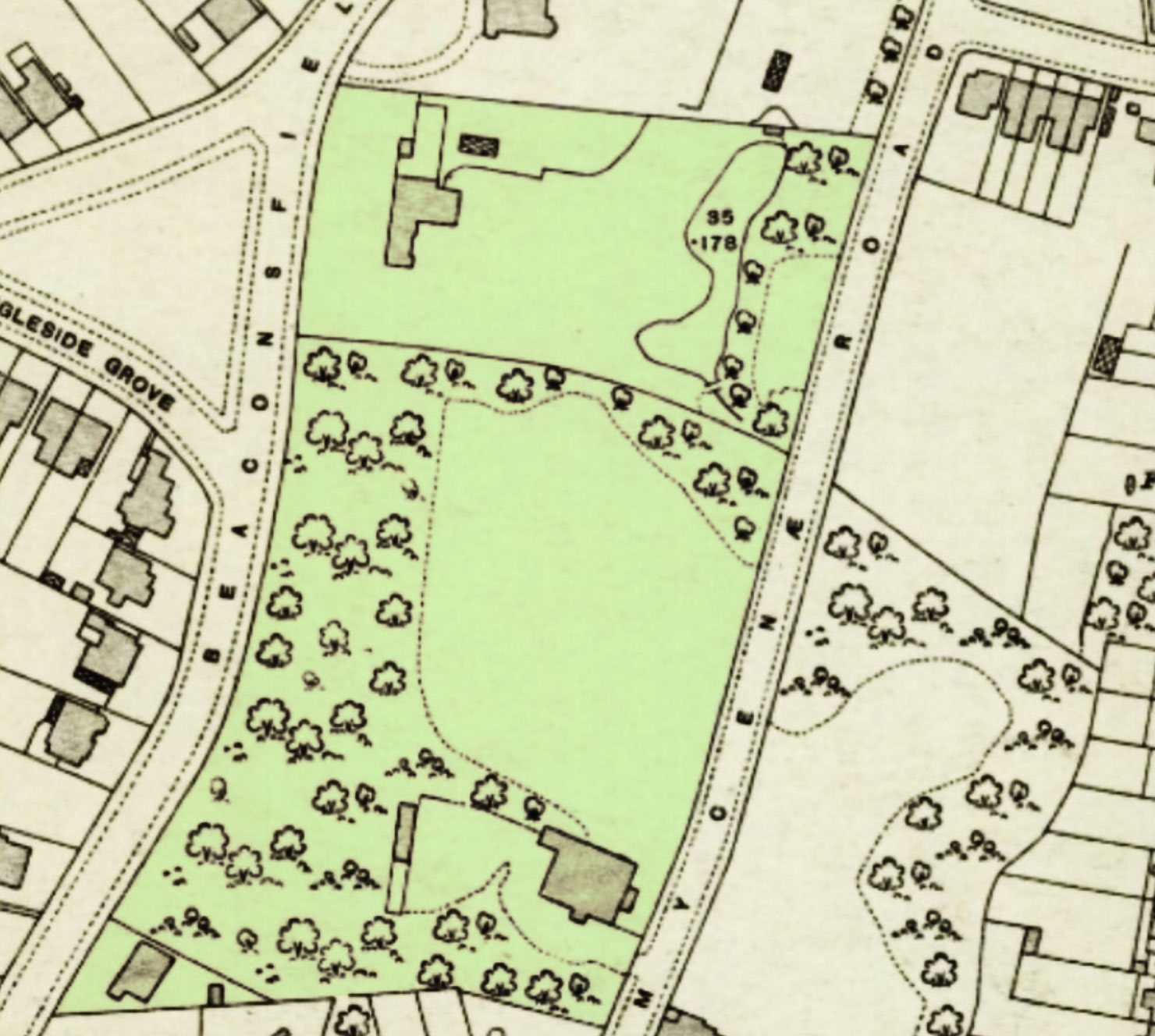
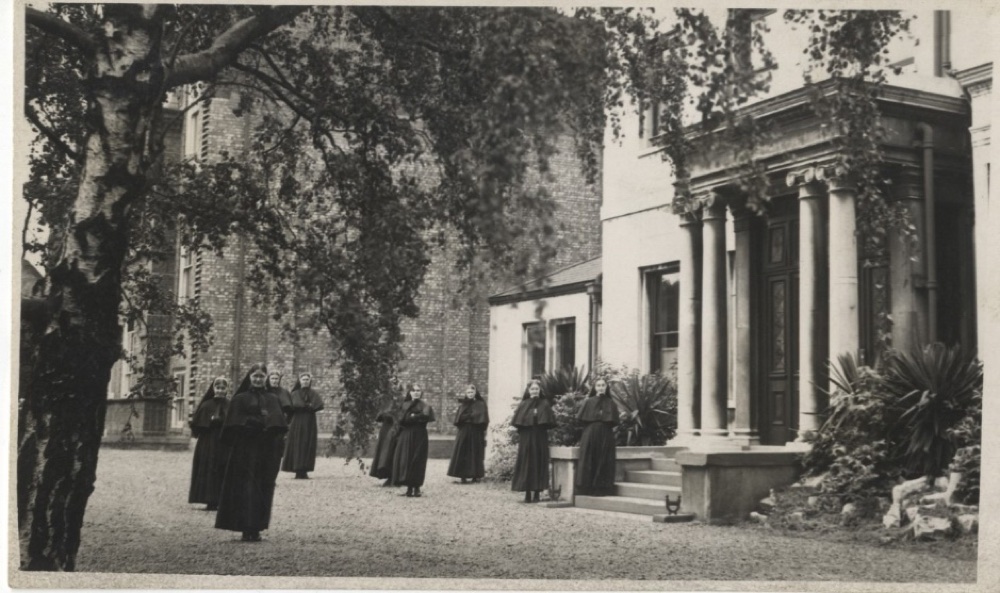
After the war, the property was acquired by the Convent of the Little Sisters of the Assumption. Mycenae House was built in 1923 as a novitiate house for aspiring nuns.
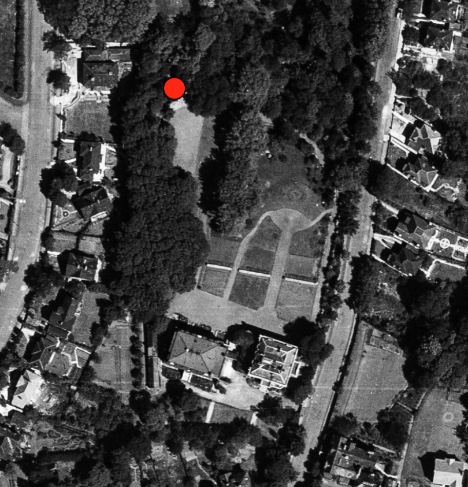
The aerial photo shows an interesting layout for the main part of the garden at about this time.
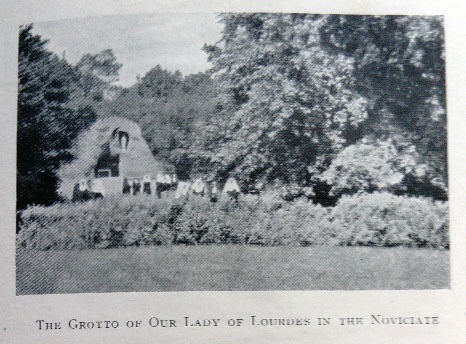
The nuns left in 1967 and the whole site was acquired by Greenwich Council. Woodlands became a local history centre, and more recently a school, while the novitiate house became a community centre, originally known as Kidbrooke House but now as Mycenae House.
The gardens remain with the council, which encourages local ‘Friends groups’ to help in the management and development of their local parks. The Friends of Mycenae Gardens are the relevant group for these gardens, which are now an important community resource, but also a site of importance for nature conservation. If you would like to know more, or would like to help preserve and develop these gardens, their nature and their history, get in touch or lend a hand.
With thanks to Lynne Dixon, a local historian, whose work and materials have been a major contribution to this section.